

Components
- 3 1/4 cups of wheat flour (tea measurement)
- Half a teaspoon of instant dry active yeast
- Two tablespoons of salt
- 13/4 taza (de té) de agua tibia
- 2 tablespoons of extra virgin olive oil
- One gala apple
- 1/3 cup of demerara sugar (tea)
- 1 teaspoon of ground cinnamon
Setup phase
- In a spacious bowl, combine the flour, yeast, and salt. Pour in the warm water all at once and stir thoroughly using a silicone spatula—there’s no need to let it soak; simply mix until the flour fully absorbs the water. The dough will be sticky, which is normal, so avoid adding extra flour. Be careful with the water temperature: it should be just warm to initiate fermentation, which will occur in the refrigerator; if the water is too hot, it can deactivate the yeast.
- Put the olive oil in a bowl spacious enough to allow the dough to expand and increase in volume. Move the dough into the bowl containing the olive oil, using a silicone spatula to scrape the bowl thoroughly. Gently lift the dough from the bottom with the spatula so that it is coated with the olive oil—there’s no need to mix the oil into the dough, just ensure the surface is covered.
- Cover the bowl with plastic wrap or a lid to prevent the dough from drying out. Place it in the refrigerator to ferment for a minimum of 12 hours and up to 36 hours. The dough will ferment gradually, and the high water content will allow the gluten to develop without soaking.
- Once the fermentation period is complete, place the dough onto a 30 cm × 20 cm non-stick baking tray. If your baking tray is not non-stick, coat the bottom with one tablespoon of olive oil. In a separate small bowl, combine sugar and cinnamon powder.
- Sprinkle the dough with 3 tablespoons of the cinnamon sugar mixture and fold it over itself twice to combine. Using your hands or a spatula, spread the dough evenly across the bottom of the baking sheet—it doesn’t need to cover the entire surface, as it will expand slightly while baking and settle in the pan.
- Cover the dough with a cloth and allow it to rest for 50 minutes. It should be kept at room temperature and well-aerated before baking.
- With 30 minutes left in the resting time, start preheating the oven to 220 °C (high temperature).
- After resting, wash, dry, and slice the apple lengthwise into halves. Remove the core and seeds, then use a mandolin to slice the halves into thin strips (or use a knife if you prefer).
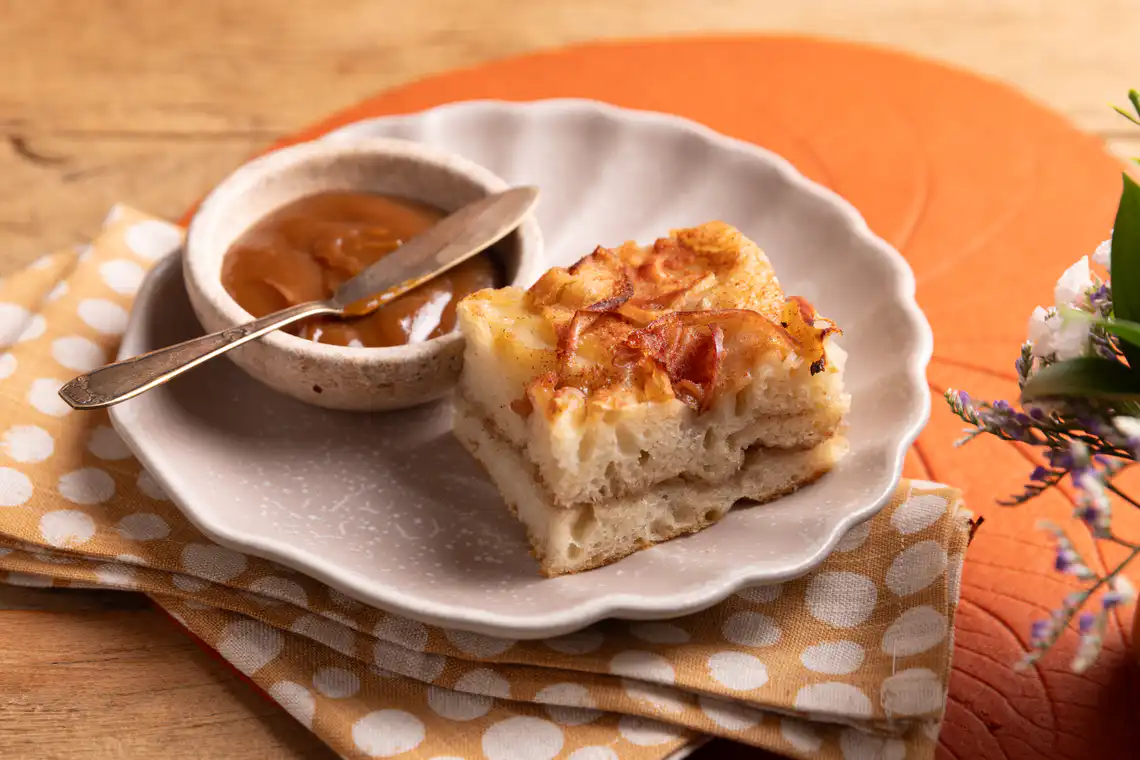
- Dampen your fingertips with water and gently press the dough without piercing or tearing it. Arrange the apple slices on the dough, pressing them down lightly — the goal is for some of the apple to sink into the dough; the rougher it looks, the better the outcome. Sprinkle the leftover sugar mixed with cinnamon over the apples.
- Place in the oven and bake at 220 °C (high heat) for approximately 15 minutes, until it puffs up and starts to caramelize around the edges. Then reduce the oven temperature to 200 °C (moderate heat) and continue baking for another 20 minutes, or until it turns golden brown.
- Take the attention away from the oven and move the dish to a granny (or set it on the stove grate) to warm up before slicing and serving.
Note: Be familiar with your oven, as cooking times may differ. This varies depending on whether the oven is electric or gas. We tested it in a gas oven and used the grill for 3 minutes after baking to add sweetness.
Please provide the text you would like me to paraphrase.
This dish can also be enjoyed as a dessert, served with ice cream, caramel sauce, and coffee.