
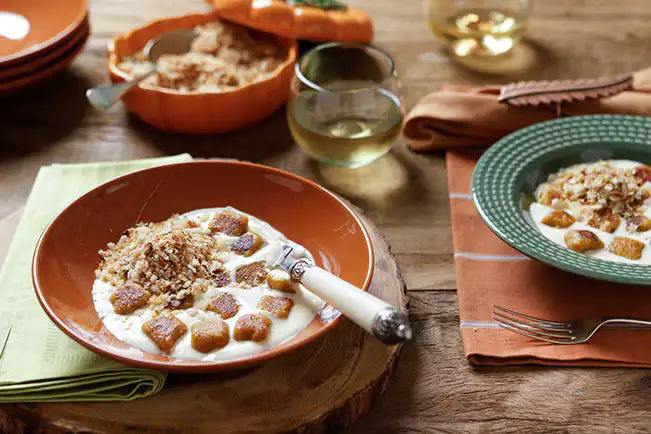
Components
- 500 g of peeled and chopped Japanese pumpkin (approximately one-quarter of a large pumpkin)
- One large potato weighing approximately 200 grams.
- Half a teaspoon of wheat flour
- Half a tablespoon of olive oil
- 1 teaspoon of salt
- freshly ground pepper
- freshly grated nutmeg to taste
Setup phase
- Set the oven to 180 °C (moderate heat) and allow it to warm up.
- If you purchased pumpkin with the skin on, remove the seeds and slice the pumpkin into pieces about 3 cm thick. Then, cut each slice into medium-sized chunks and peel them.
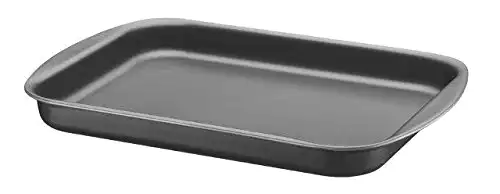
- Place the pumpkin in a standard baking dish, add the oil along with the water, stir, and spread the pieces evenly to prevent liquid from pooling during baking.
- Place in the oven and bake for approximately 40 minutes until the pumpkin is very tender – check doneness by piercing with a fork. Note: there is no need to flip the pieces, as the golden crust that develops adds extra flavor to the gnocchi.
- In the meantime, peel the potato and cut it into four parts. Place them in a small pot, cover with water, and bring to a boil over medium-high heat. Once boiling, reduce the heat and simmer for approximately 15 minutes until tender – test with a fork to confirm.
- Thoroughly rinse the potato. While still warm, place the pieces in a juicer over a large bowl.
- Take the pumpkin out of the oven and press the pieces through a sieve as well. Season with salt, pepper, and nutmeg, then stir thoroughly with a spatula. Allow the mulberry puree to cool before making the gnocchi dough—if it remains too hot, it will absorb extra flour, resulting in dense gnocchi.
- On the clean bench, put half a teaspoon of flour and then add the mashed potatoes with pumpkin. Gently mix with your hands to combine the flour without making it too wet. Use the palm of your hand to press the dough towards you, folding the flour in, just until a ball forms. Note: this dough is moist. The more you work it, the more flour will be necessary, making the dough heavier.
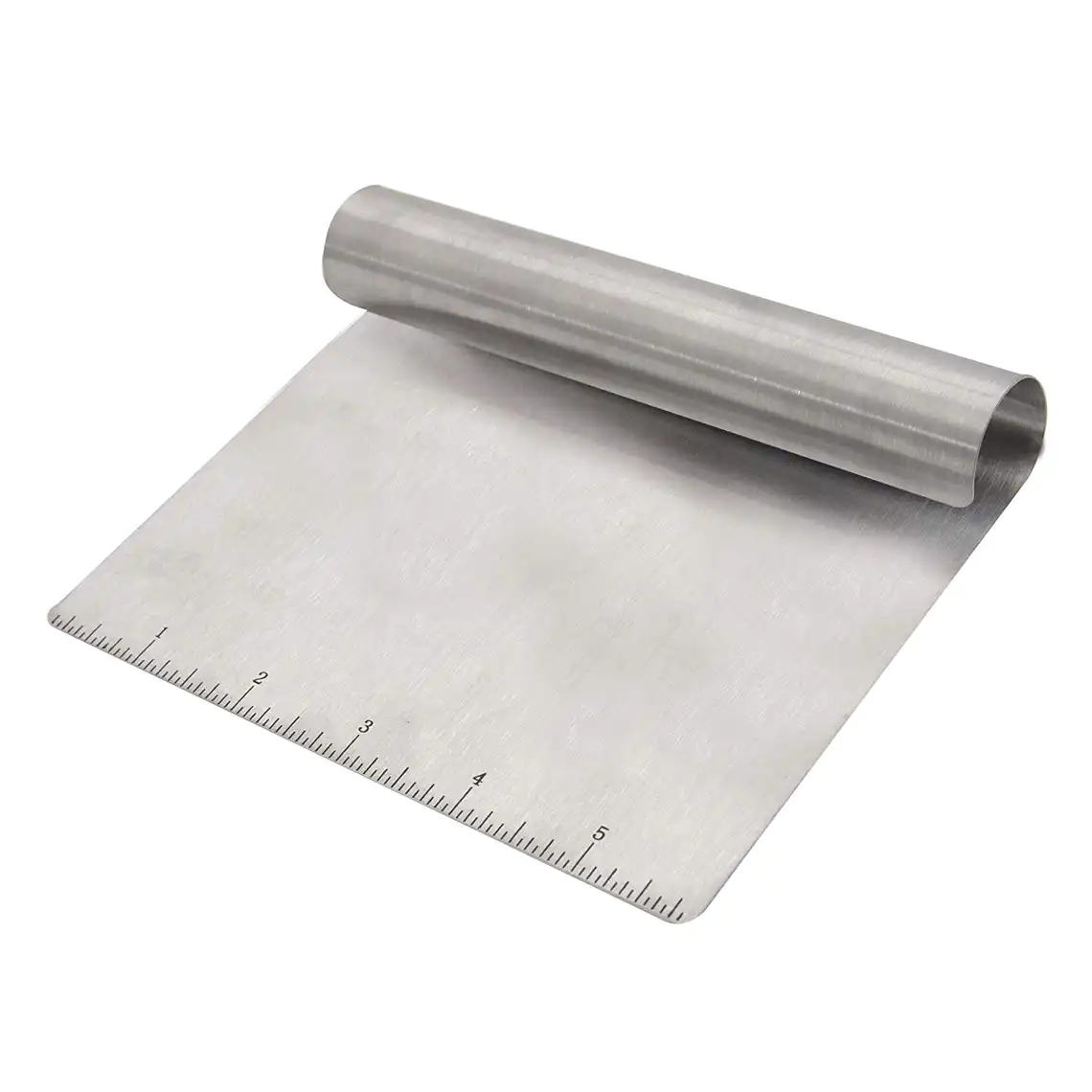
- To shape the horns, dust a large baking sheet and the countertop with wheat flour. Using a baker’s spatula or knife, cut a piece of dough and roll it on the floured surface into a cylinder about 2 cm thick. Slice the cylinder into 2 cm pieces with the spatula to create the gnocchi. Place the horns on the floured baking sheet and continue with the remaining dough, sprinkling the countertop with a bit of flour as needed.
- Bring a large pot with approximately 3 liters of water to a high heat. Prepare a large (or heat-resistant) baking tray by greasing it with oil. When the water reaches a boil, stir in 1 1⁄2 tablespoons of salt.
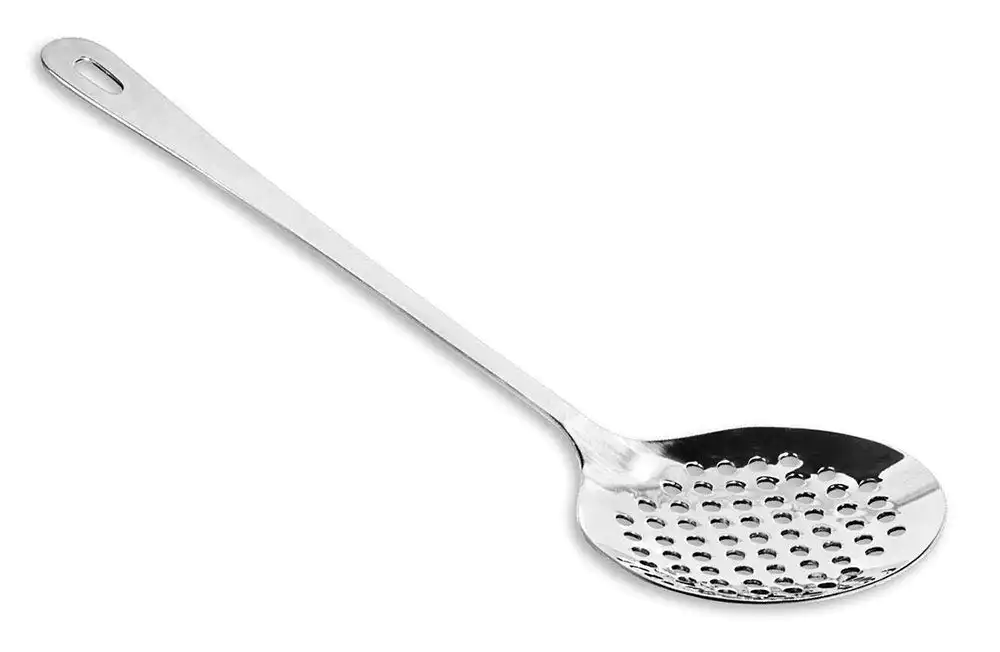
- Using a skimmer, immerse roughly 20 pints at once in the boiling water and cook until they rise to the surface. Then, with the squeezer, take out the cooked tints, ensuring the water is thoroughly drained, and place them on the oiled baking pan. Continue this process with all the horns.
Please provide the text you would like me to paraphrase.
If you plan to cook the horns and finish them later or the following day, soak the cooked horns in a bowl of ice water before placing them in a baking dish with oil. Cover with plastic wrap and store in the refrigerator until ready to use. To serve with a hot sauce, briefly dip them in boiling water or quickly brown them in a frying pan with olive oil.
CONCLUSION AND POLICY
Components
- 2 cups of fresh cream for tea
- 1 cup (tea) of brewed orange-baia broth
- Half a teaspoon of salt
- oil as desired
- Add ground pepper gradually, adjusting to your preference.
Preparation phase
- Place a regular pan with the orange broth over medium heat. Once it begins to boil, season with half a teaspoon of salt and pepper according to your preference. Stir in the cream carefully using a spatula and continue cooking on medium heat.
- Once the mixture begins to boil, reduce the heat and simmer for approximately 20 minutes, stirring occasionally, until the sauce thickens and decreases in volume. To test the consistency, dip a spoon into the sauce: it should coat the back of the spoon and, when you run your finger across the surface leaving a trail, the cream should stay in place without sliding. Overall, the sauce should reduce to about two-thirds of its original volume.
- While the sauce is cooking, use the time to cook the pasta. Heat a non-stick frying pan over medium heat. Once hot, add water with 1 teaspoon of olive oil and place as many pasta pieces as possible to boil without overcrowding. Let the pan sit for about 2 minutes, then stir to evenly toast the surface of the pasta.
- Place the golden horns on a rack and repeat the process with the rest, making sure to drizzle olive oil over the frying pan each time. Serve the horns accompanied by the orange sauce and almond flour.
Out of fresh cream?
If fresh milk cream is unavailable, you can substitute it with 1 can of milk cream (without serum) combined with 1 cup of milk. When preparing, mix with a wire whisk to prevent lumps from forming.
Purchase only what is necessary
Store
Game featuring six side dishes, cinnamon-flavored
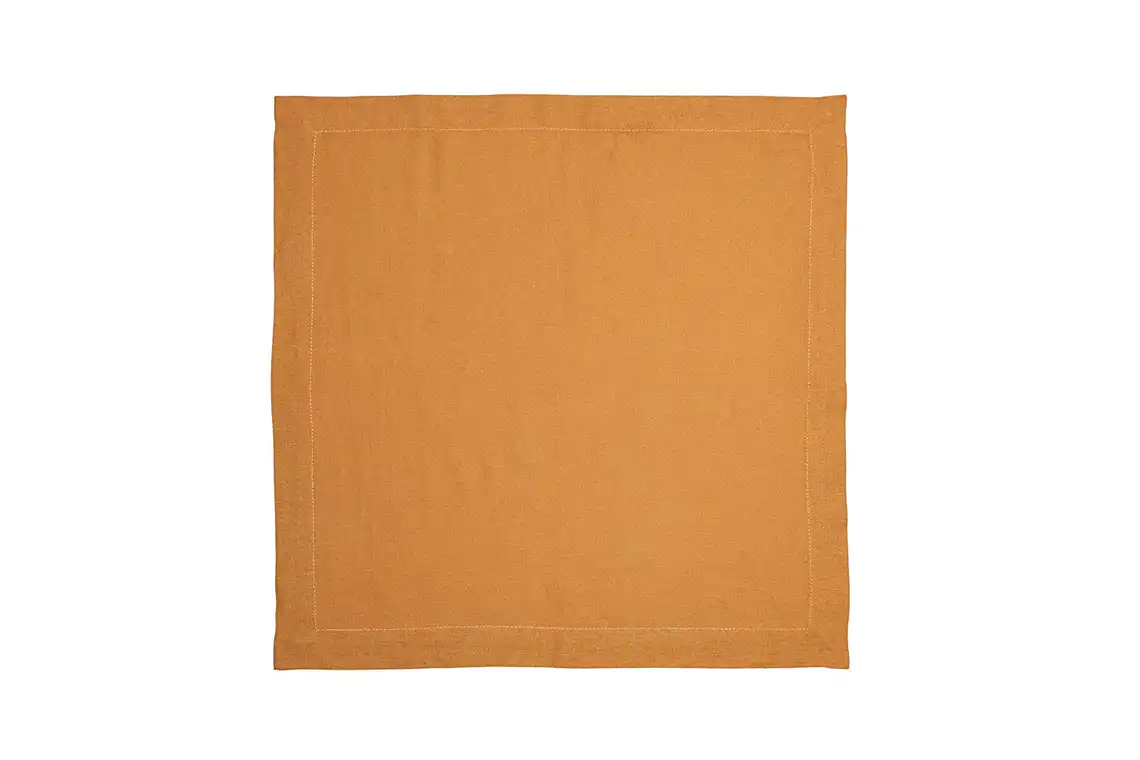
Flax Napkin Curry (set of 2), Acervo Paninha
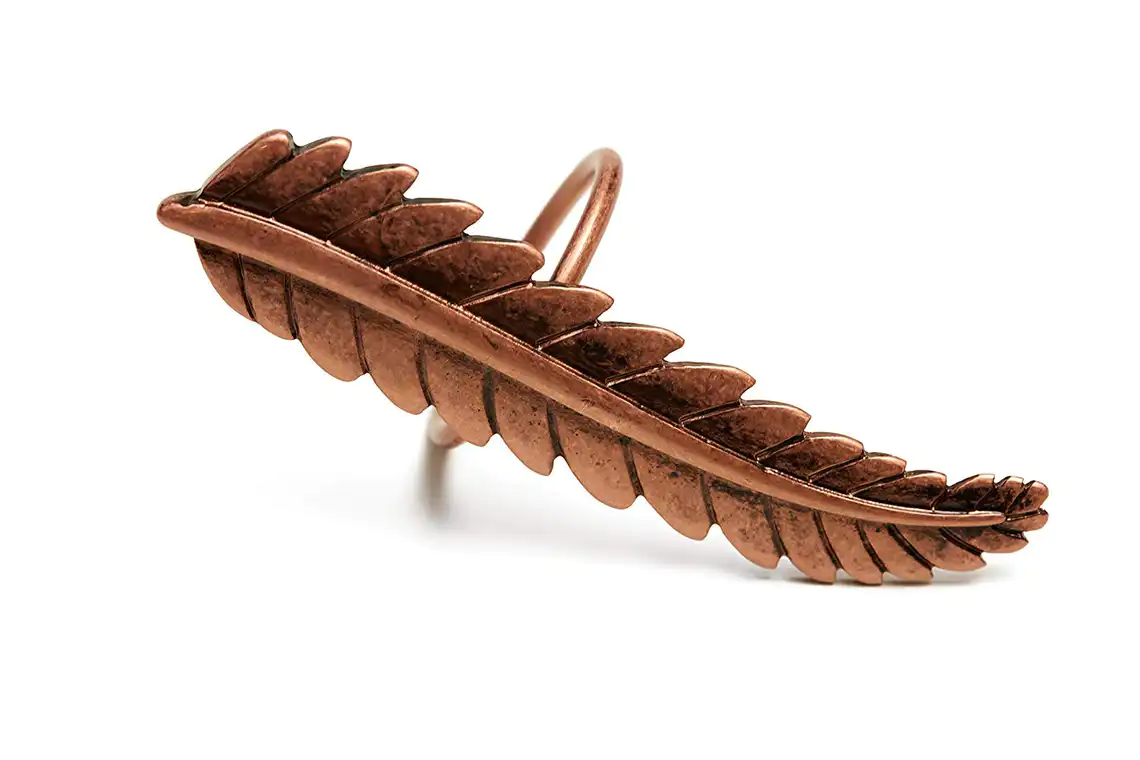
Conjunto de dois anéis para guardanapo Samambaia, da coleção Paninha.
chsyys/StockVault
Zwilling, Chief Knife

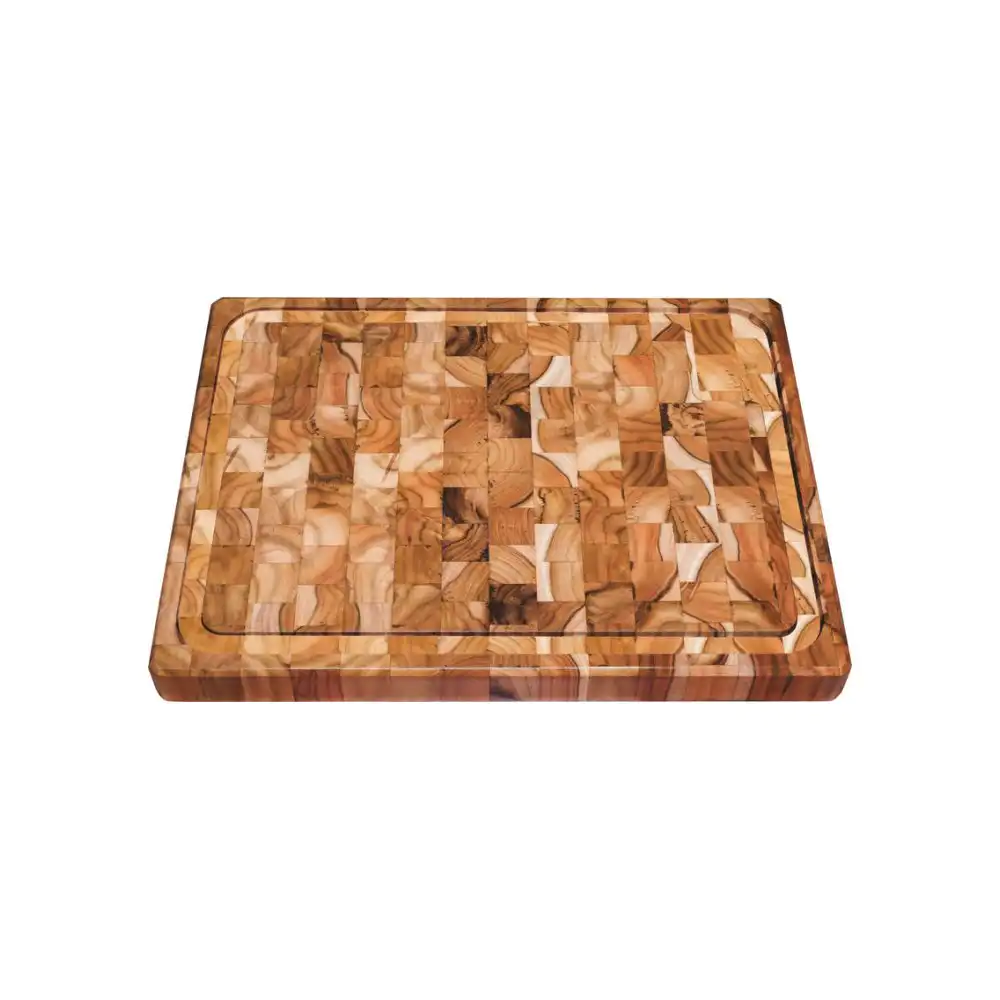
Tramontine Wooden Table
Tramontina Aluminum Rare Roast
Mimo Style stainless steel spatula
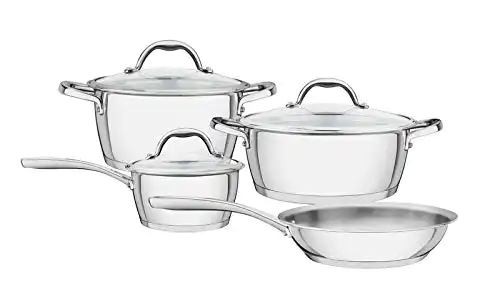
Tramontina Stainless Steel Cookware Set with Glass Lids
Hercules Stainless Steel Sheet