Components
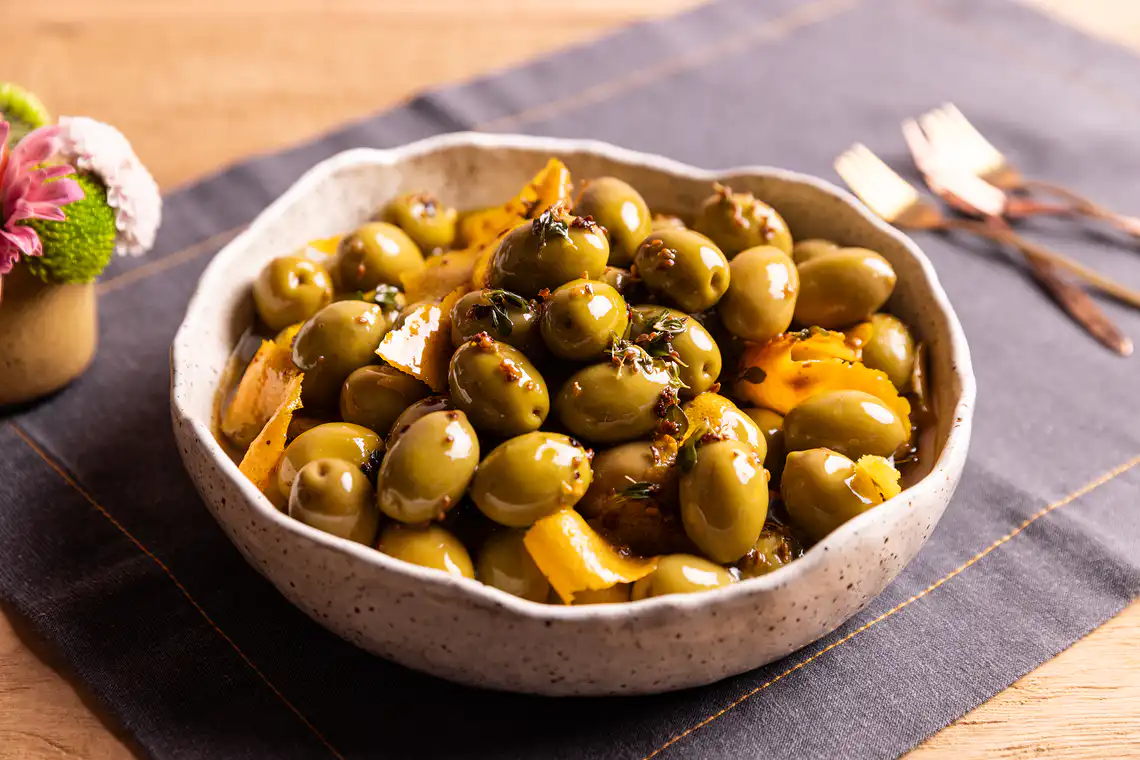
- 3 tea cups of green olives with pits (approximately 450 g drained)
- 1 1/2 cups (tea) of olive oil Walk
- 8 sprigs of trimmed lemon thyme
- 1 tablespoon of fennel seeds
- 1½ teaspoons of dried calabresa pepper
- peel from 2 bay oranges
Mode of preparation
- Thoroughly wash and dry the oranges. Use a vegetable peeler to create small strips of the peel, taking care to avoid the white pith, which is bitter (alternatively, you can use a sharp vegetable knife).
- In a small pan, combine the olive oil, calabresa pepper, and fennel, then heat over low flame for approximately 5 minutes, just enough to warm and infuse the olive oil without boiling. Once small bubbles appear, remove from heat. Stir in the orange strips and thyme sprigs, allowing their aroma to be released by the remaining heat of the olive oil.
- In a medium glass bowl, combine the olives and water with the warm infused olive oil—ensuring the olives are as submerged as possible for best results.
- Allow it to cool entirely before covering and placing it in the fridge for a minimum of 4 hours, allowing the olives to better soak up the flavors of the olive oil. If you wish, you can prepare it the day before or up to one month in advance. The longer the olives marinate, the more flavorful they become.
Keep in mind that olive oil may become slightly solid when frozen; if this occurs, take the jar out of the fridge at least 15 minutes prior to serving.
Please provide the text you would like me to paraphrase.
Separate the olives into three medium-sized glass jars (each holding around 300 ml). Use tongs to place the orange peels into the jars, positioning them among the olives. Alternate adding olives and hot oil—since the fennel and pepper usually settle at the bottom of the pan, if that occurs, use a spoon to evenly distribute the spices into the jars.
Please provide the text you would like me to paraphrase.
Once the olives are gone, don’t discard the olive oil. It is incredibly flavorful and can be used in various dishes. Use it for baking, dressing salads, enhancing vegetables, or adding to soups and stews.