
Components
- 4 cups (tea) of durum wheat semolina (640 g)
- 11/3 cups of warm tea water
- salt used in preparing dough
- semolina as needed for mashing
Mode of preparation
- In a big bowl, put the semolina and create a well in the middle. Slowly pour in warm water, stirring from the center outward with a fork — it’s crucial to add the water gradually to avoid adding too much; initially, the mixture will seem too dry, but that is normal.
- After forming the dough into a ball, place it on the countertop and knead for 10 minutes until it becomes smooth and soft. The dough should be firmer and drier than bread dough—if it’s too wet from the soak, shaping the noodles later will be more difficult. Initially, the dough may feel stiff and uncooperative, but as it continues to soak, it will become smooth and pliable.
- Wrap the dough in plastic wrap (or place it in a plastic bag) and allow it to rest for 30 minutes at room temperature. This resting period is crucial because it makes the dough less elastic and softer, making it easier to shape. If you choose to cover it with a cloth, dampen the cloth slightly to prevent the dough from drying out.
- Using a baker’s spatula (or knife), slice off a section of the dough and shape it into a roll approximately 1 cm thick. Then, cut the roll into segments about 1 cm in size. Keep the remaining dough covered to prevent it from drying out. Note: there is no need to sprinkle semolina on the work surface while shaping the dough.
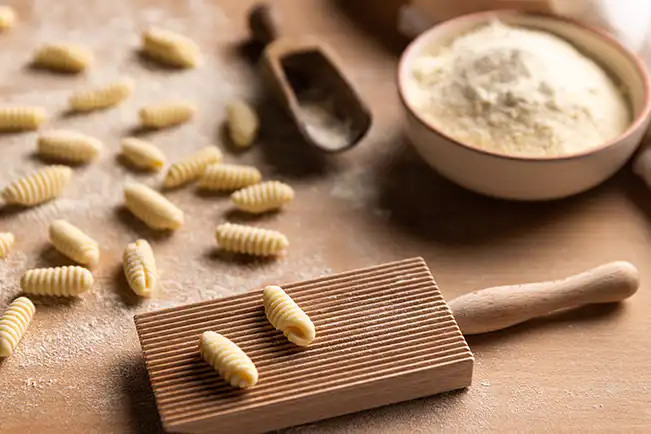
- To shape the dough: place a portion of dough on a pinch board. Use one hand to hold the board steady while pressing the dough with a baker’s spatula in the other hand, sliding the formed cavatelli along the board. Move the shaped pieces onto a baking tray lightly dusted with semolina to keep them from sticking. Continue this method with the remaining dough.
- To prepare the dough, use a large pot with approximately 8 liters of water and bring it to a boil over high heat. Once boiling, add 2½ tablespoons of salt and the cavatelli. Cook for around 5 minutes, stirring occasionally, until they reach an al dente texture. After cooking, drain the water and serve with your favorite sauce.
NOTE: Since the quantity of noodles is substantial, you may choose to cook the dough in two smaller pots of boiling salted water.
Punto de congelación
The dough made with semolina and water freezes very well; it is better to freeze it than to dry it for storage. Arrange the shaped cavatelli on a baking tray; they can be placed close together but without overlapping to prevent sticking. Freeze them for about 2 hours. Once frozen, transfer the pasta to an airtight container or bag and keep it frozen for up to 3 months. This way, the cavatelli remain separate, and you can use only the amount you need. To cook, put the frozen noodles directly into boiling water and cook for about 3 minutes until al dente.
Please provide the text you’d like me to paraphrase.
The recipe can be prepared in smaller portions by using this formula: for every cup of semolina, add one-third of a cup of warm water.