
For the fundamental mass
Components
- 280 grams of wheat flour
- 120 grams of coarse hard semolina
- Four eggs
Setup phase
- In a big bowl, combine the flours and set aside a small amount (approximately 1/3 cup) – the total flour quantity may change depending on the egg size.
- Crack one egg into a small bowl, then move it to a separate bowl. Use a fork to gently beat the eggs, combining the whites and yolks.
- Create a well in the middle of the flour, resembling a “volcano.” Pour the beaten eggs into the well and begin mixing with a fork, starting from the center and moving outward, gradually incorporating the flour. Use your hands to knead the dough until the eggs are fully blended. Add the reserved flour if needed. Move the dough to the countertop and knead until it becomes smooth.
- Wrap the dough in plastic wrap and allow it to rest for 20 minutes. In the meantime, get the filling ready.
Scheduling
The fresh dough can be stored in the refrigerator, wrapped in plastic wrap, for as long as 2 days.
PARA O RECHEIO
Components
- 300 g of offal (or any other cooked, roasted, or grilled meat)
- 50 g of meat stew sauce
- 150 g of potato along with cooked vegetables and meat
- 25 g of shredded parmesan cheese
- season with salt as desired
- freshly grated nutmeg added as needed to taste
- thyme as desired
Ready state
- Shred the pot meat and process the potatoes and vegetables through the potato juicer (or, if you like, run the meat and vegetables through the grinder).
- In a bowl, combine the meat with the vegetables and mashed potatoes, then incorporate the Parmesan, thyme, and season with salt and nutmeg to your preference. Slowly add the meat sauce to keep the filling moist.
Without any vegetables
If you don’t have potatoes, breadcrumbs can be used to bind the meat filling.
For the Limon man
Components
- 1 liter of fresh cream from milk
- Pieces of one Sicilian lemon
- 100 ml of filtered Sicilian lemon broth
- 75 grams of butter
- 10 milliliters of olive oil
- grated nutmeg added as needed for flavor
- Add ground pepper gradually to achieve the desired flavor.
- season with salt as desired
- Seven leaves of sage
- A small amount of sugar, about a pinch.
Setup phase
- In a spacious, premium frying pan, warm the butter over medium heat. As it melts, incorporate the sage leaves and sauté briefly.
- Pour in the lemon broth and maintain medium heat until it reaches a boil. Reduce the heat and gradually add the cream while stirring continuously with a whisk to combine. Season with a small amount of sugar, salt, nutmeg, and pepper according to your preference. Let it simmer until it thickens a bit.
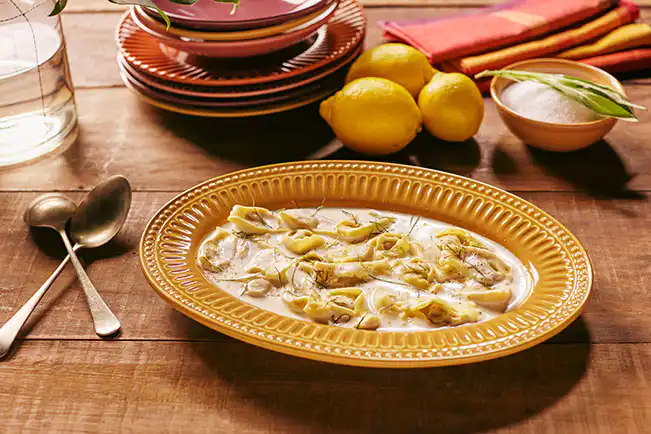
- Serve the meat ravilia topped with lemon sauce and garnished with sage zest and leaves.
Is there no fresh milk cream available?
You have the option to use:
500 ml of milk combined with 500 ml of meat broth
500 ml of meat stock combined with 500 ml of canned heavy cream
500 ml of heavy cream (can) plus 500 ml of milk
FOR ASSEMBLY AND SEALING
Setup phase
- After resting, divide the dough into four portions. Use a pasta roller (or a rolling pin) to roll out the dough into sheets about 2 mm thick.
- To prepare the ravioli: place a sheet of dough on the countertop. Arrange portions of filling, about 10 g each, in the center, side by side, leaving approximately 1 cm of space between them. Lightly spray the dough with water and cover it with another sheet of dough. Using the sides of your hands, press out any air around the filling and seal the edges of the dough to prevent the ravioli from opening or forming bubbles during cooking. Use a ravioli cutter or a fluted wheel to cut around each filling portion. You can leave them as squares or pinch and fold the edges to shape the plin. Alternatively, you can use ravioli molds if you prefer.
- Move the raviolis to a lightly greased surface and repeat with the remaining ones.
- Bring a large pot of water to a boil over high heat. Add salt and submerge a portion of the ravioli – cook without covering to prevent sticking. Lower the heat to medium and watch closely: the ravioli are done when they float to the top.
- Using a skimmer, move to a strainer and do the same with the remaining. Serve the meat ravioli topped with lemon sauce.
Congealing
Fresh stuffed dough should be eaten promptly. If you plan to freeze or refrigerate it, first cook the noodles, then immerse the cooked ravioli in ice water to halt the cooking process. Drain them thoroughly, place them on a tray, and lightly coat with oil to prevent sticking.