

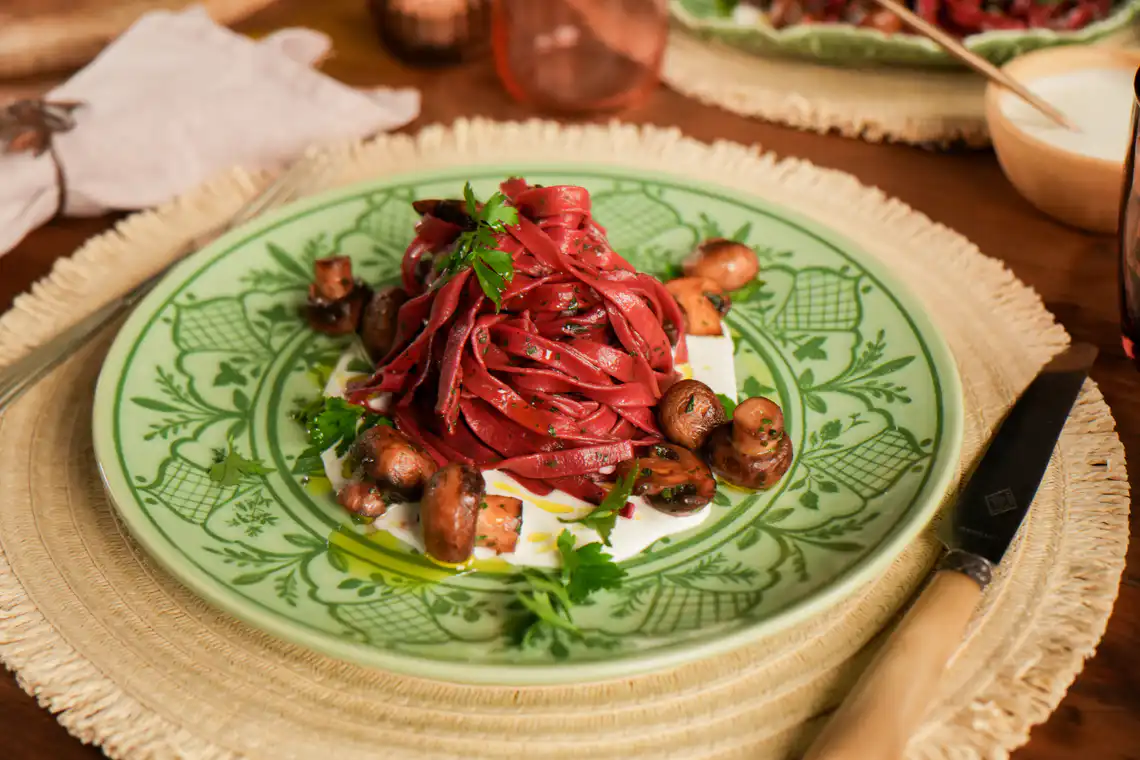
FOR THE OPTIMAL CONDITION OF BEETROOT
Components
- 1 sugar beet
- 11/3 cups (tea) of wheat flour
- One egg
- Olive oil stroll
- flour for dusting the countertop
Ready state
- Set the oven to 200 °C (medium heat). Peel the beetroot and slice it in half.
- Cut a large sheet of aluminum foil measuring 35 cm by 40 cm, place the beet in the center, drizzle with a bit of olive oil, then bring the edges together and fold the foil to create a sealed packet. Bake in the oven for approximately 30 minutes, or until the beet is tender.
- Carefully open the papillote to avoid steam burns and allow the beet to rest for 5 minutes while you separate the other ingredients. In a mixer cup (or blender), combine the roasted beet and egg, then blend until well shredded and a puree is formed.
- In a bowl, put the flour and create a well in the middle, resembling a “volcano.” Place the beetroot mixed with the egg in the center and begin mixing with a fork, moving from the center outward. Knead with your hands until all the flour is combined and a dough ball forms. Move the dough to a lightly floured surface and knead until it becomes smooth. Note: depending on the size of the beetroot, you might need to add a bit more flour; add it gradually during kneading if needed.
- Wrap the dough in plastic wrap and let it rest for 20 minutes to make it less stretchy when rolling out. In the meantime, separate the sauce ingredients.
- To roll out the dough: divide it in two and dust the countertop with wheat flour. Use a rolling pin to flatten one portion until it is thin, adding flour as needed to prevent sticking. Fold the dough onto itself and slice it into strips approximately 1 cm wide to create tagliatelle. Repeat with the remaining half. Alternatively, you can use a pasta machine.
Please provide the text you would like me to paraphrase.
If you choose to cook beet in an Air Fryer, add 2 tablespoons of water to the papillote and cook at 200 °C for approximately 40 minutes.
FOR MOLY AND COMPLETION
Components
- 200 grams of Portobello mushrooms
- 1/2 cup (tea) of cottage cheese (approximately 125 g)
- 2 tablespoons of milk
- 2 tablespoons of soy sauce
- Olive Oil Stroll
- Five sprigs of parsley
- Add salt and ground pepper as needed to suit your taste.
Setup mode
- Blend the cottage cheese in a mixer (or blender) with milk, 1 teaspoon of olive oil, and 1/4 teaspoon of salt until it becomes creamy. Set aside. Wipe the mushrooms with a damp cloth and slice each one in half (leave whole if they are very small).
- Place a large pot filled with water on high heat to bring it to a boil. In the meantime, get the sauce ready.
- Heat a large frying pan over medium heat. Add 1 tablespoon of olive oil, then place the mushrooms in the pan and cook undisturbed for 3 minutes until they turn a rich golden color. Season with 1/2 teaspoon of salt and pepper to taste, then sauté for an additional 2 minutes.
- Reduce the heat, pour in the shoyu, and cook for 2 minutes, stirring occasionally so the mushrooms soak up the flavor. Turn off the heat and set aside.
- When the water reaches a boil, add 1½ tablespoons of salt and the noodles. Cook for approximately 2 minutes or until they are al dente, though the time may vary depending on the thickness of the fresh dough. Reserve ½ cup of the cooking water and then drain the noodles.
- Place the frying pan back on medium heat, drizzle the mushrooms with one tablespoon of olive oil, stir in the parsley, add the noodles, and gently combine, gradually adding some of the cooking water to loosen the sauce. Serve immediately with the cream cheese.
Please provide the text you would like me to paraphrase.
You can freeze the uncooked beet noodles and prepare the sauce when ready to serve. To do this, arrange the raw tagliatelle in portions on a baking tray, being careful not to twist the strands to prevent them from breaking during cooking, and place it in the freezer to set. Once frozen, transfer the noodles to a suitable food bag or an airtight container and keep them in the freezer for up to three months.
To defrost: the noodles are transferred directly from the freezer into a pan of boiling water.